

Own Your List: Recover Ticket Sales With Email Retargeting for Venues


Email audience retargeting uses your first-party subscriber data to send behavior-triggered, personalized emails that recover lost conversions and re-engage known prospects. Instead of guessing what a cold audience wants, you respond to what a real subscriber already did: browsed a page, abandoned a cart, or went quiet after a purchase. The payoff is a list you own outright, immune to platform algorithm shifts, and messaging relevant enough to earn a click instead of an unsubscribe.
TL;DR:
Retargeting emails should be sent within hours of cart abandonment or browse inactivity for maximum impact, with delays reducing conversion chances.
Segmentation based on behavioral, transactional, and recency factors significantly improves engagement and click-through rates compared to broad, generic lists.
Using a real-time event capture system and accurate ID matching is crucial, as batch syncs can cause delays that harm cart recovery performance.
Attributing success to retargeting requires tracking click-throughs, conversions, and revenue, not unreliable open rates affected by privacy changes.
Building a small, verified, and highly relevant flow first ensures reliability, before scaling to multiple automated sequences for different behaviors.
Table of Contents
What Is Email Audience Retargeting and How Does It Work?
Email retargeting is the practice of sending personalized, behavior-triggered messages to people already on your subscriber list who interacted with your brand but didn’t finish the job. That’s the core distinction from ad-based retargeting: email works off subscribers you already have permission to contact, while display and social retargeting chases anonymous cookie-matched users across the web using pixels.
Both systems start with a trigger: a site visit, a cart abandonment, a form fill. But what happens next diverges sharply.
Email retargeting matches the trigger to a known email address (via CRM record, login, or checkout capture) and fires a message from your ESP.
Ad retargeting matches the trigger to a browser cookie or device ID and serves a paid ad through a platform like Meta or Google.
Email doesn’t require ongoing ad spend once the automation is built, though it depends on accurate identity matching between your website events and your CRM.
Ad retargeting reaches people who never gave you an email address, which makes it a useful complement rather than a replacement.
Most mature marketing programs run both. If a subscriber abandons a cart, email hits them first because it’s cheap and immediate. If they don’t convert within a few days, a retargeting ad on Meta or YouTube can pick up the thread with fresh creative, which is exactly the kind of cross-channel sequencing performing arts marketers use to fill single-night engagements.
What Are the Main Types of Retargeting Emails?
Five flows cover the vast majority of retargeting scenarios, and each one hinges on a specific behavioral trigger rather than a calendar date.
Abandoned cart. Fires when a shopper adds a ticket, membership, or product to cart and exits before checkout. This is the highest-converting retargeting email type because intent is already high.
Browse abandonment. Triggers when someone views a product or event page multiple times without adding to cart. Lower intent than cart abandonment, so the tone should stay informational rather than pushy.
Win-back / lapsed subscriber. Targets subscribers who haven’t opened, clicked, or purchased in a defined window, often 60 to 120 days.
Post-purchase cross-sell and upsell. Fires after a completed transaction to suggest a companion purchase, a season add-on, or a replenishment reminder timed to typical repurchase cycles.
Re-engagement after a lapsed visit. Fires when a repeat customer stops visiting after a long streak of activity, signaling early churn.
Business recommends automating sends around behavioral triggers like cart abandonment and inactivity rather than batch-and-blast calendars, and Shopify’s data on commerce retargeting flows backs the same pattern: automated abandoned cart and post-purchase upsell sequences consistently outperform generic newsletters.
Exclusions matter as much as the triggers themselves:
Suppress anyone who completed the desired action within the last few hours to avoid an awkward “come back!” email to someone who already bought.
Exclude subscribers currently in an active win-back or onboarding sequence to prevent overlapping messages.
Pull out anyone who unsubscribed or hard-bounced, even if your automation logic technically still qualifies them.
How Do You Build High-Value Retargeting Segments?
Segmentation quality decides whether retargeting feels personal or generic, and generic is what kills performance. Experts at the American Marketing Association point to irrelevant, one-size-fits-all follow-ups as the single biggest reason retargeting campaigns underperform. A first-time visitor and a five-time repeat buyer should never see the same email.
Build segments around three criteria layered together:
Behavioral: cart abandoners, browse abandoners, page-view frequency
Transactional: first-time buyer, repeat buyer, high-value buyer, subscription holder
Engagement recency: active in the last 30 days, dormant 60 to 120 days, lapsed beyond 120 days
Practical segment examples: a first-time visitor who viewed a show page twice gets a soft, informational nudge. A cart abandoner with a ticket sitting unpurchased for two hours gets a direct, urgency-driven email. A repeat ticket buyer who hasn’t purchased in six months gets a win-back message referencing their past attendance, not a blanket discount blast.
Suppression lists deserve the same attention as your active segments. Prune addresses that haven’t opened or clicked in 6 to 12 months into a separate reactivation-only track, and drop anyone who never engages after two or three attempts. A bloated, unresponsive list drags down your sender reputation for everyone else on it.
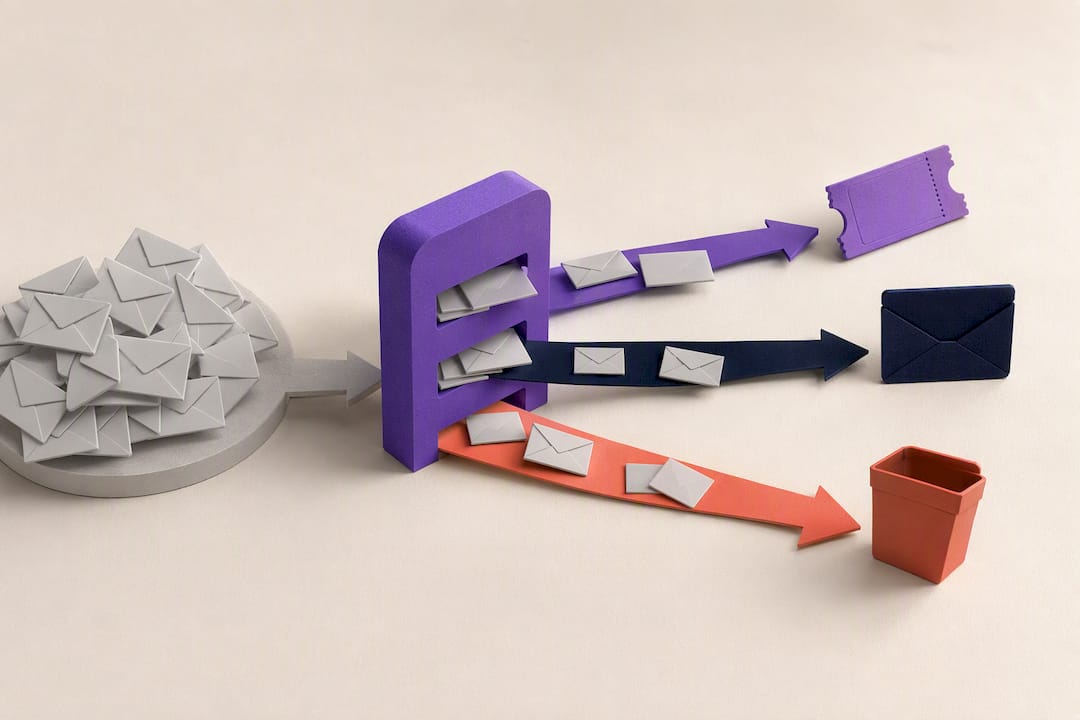
Pro Tip: Smaller, sharply defined segments almost always outperform large generic ones on click-through rate, even though the raw send volume is lower. Optimize for relevance per send, not list size.
When Should You Send Retargeting Emails?
Timing decides whether a retargeting email feels helpful or feels like it arrived a week too late. High-intent triggers demand speed; low-intent ones tolerate more patience.
Abandoned cart sequence: send email one at 1 hour post-abandonment, email two at 24 hours, and a final nudge at 3 days if the cart is still unconverted. Business.com notes that a reminder sent within roughly 3 hours, or as fast as 1 hour, is a common industry benchmark for cart recovery.
Browse abandonment: wait 24 hours before the first send since intent is lower, then stop after one follow-up if there’s no click.
Win-back cadence: space messages 10 to 14 days apart across a 2 to 3 message sequence, since bombarding a lapsed subscriber accelerates the unsubscribe.
Post-purchase cross-sell: time it to the product’s natural repurchase or usage cycle rather than a fixed number of days.
A/B test one variable at a time, usually send delay first, since timing shifts tend to move click-through rate more than any single creative change. Run each test for at least two full cycles before calling a winner.
What Personalization Actually Moves the Needle?
Show the exact product, event, or ticket tier the subscriber viewed, paired with concise, benefit-driven copy rather than a generic “come back” line. A subject line that names the specific item (“Your seats for Saturday are still open”) consistently beats a vague one (“Don’t miss out!”).
Quick experiments worth running:
Test a countdown or scarcity subject line against a plain, informational one.
Test including a product image versus text-only copy in the first fold.
Test social proof (“87 people bought this in the last week”) against a straight benefit statement.
Discounts belong in specific situations, not every send. Use a modest incentive on the final message in an abandoned cart sequence when the item is price-sensitive, but skip discounts entirely on win-back and browse abandonment flows where a soft reminder and relevant content usually perform just as well without training your list to wait for a coupon.
Pro Tip: Build dynamic content blocks that pull the viewed product, event date, or seat category automatically, but always write a solid fallback for subscribers whose behavioral data didn’t sync correctly. A broken dynamic block that shows blank space is worse than no personalization at all.

How Do You Measure Retargeting Success Now That Opens Are Unreliable?
Open rates stopped being trustworthy once Apple’s Mail Privacy Protection began pre-fetching images for a large share of Apple Mail users in 2021, inflating opens regardless of whether a human actually engaged. Click-through rate, conversion rate, and revenue per recipient are the metrics that still tell the truth.
What to track: click-through rate, conversion rate, revenue per send, and lifetime-value lift for the retargeted cohort compared to a control group that didn’t receive the sequence. Validate attribution by matching click IDs directly against server-side purchase logs rather than trusting the ESP’s built-in conversion tracking alone.
Run a simple cohort check quarterly: pull everyone who received a given retargeting flow, compare their purchase rate against a similar segment that didn’t receive it, and confirm the lift holds up outside the platform’s own dashboard. If you’re already tracking campaign ROI across paid channels, the same discipline in attribution methodology applies directly to email.
What Tech Stack Do You Need to Run Retargeting Reliably?
Four pieces have to work together: an event capture layer on your site or checkout, a single customer view that unifies behavior and purchase history, an automation-capable ESP, and analytics that can trace a click through to a completed sale.
Event capture can run through a native ecommerce or ticketing connector, a webhook/event stream for real-time triggers, or batch syncs for lower-urgency data.
Native connectors are the fastest to set up but the least flexible if your ticketing platform is nonstandard.
Webhook-based event streams give you near-instant trigger firing, which matters for cart abandonment timing.
Batch syncs are fine for win-back and post-purchase flows where a few hours of lag doesn’t hurt.
Before launch, test three failure points specifically: confirm events actually arrive in the ESP (not just the CRM), check that dedupe logic isn’t firing the same trigger twice for one action, and verify ID-matching correctly links a browser session to the right customer record.
Pro Tip: Sync lag is the most common silent failure in retargeting stacks. Implementers consistently find that batch syncs running once every 24 hours quietly kill cart-abandonment performance because the “1 hour” trigger actually fires a day late. If cart recovery timing matters to you, insist on webhook or real-time event streaming, not batch. A dashboard built to trace ticket sales and campaign analytics end to end makes this kind of gap visible before it costs you conversions.
What Are the Legal and Deliverability Basics You Can’t Skip?
The FTC’s CAN-SPAM compliance guide sets the non-negotiable floor: every commercial email needs a valid physical address, a clear and functioning unsubscribe link, and honest header and subject-line information that doesn’t mislead the recipient about the email’s content.
Buying or renting email lists routes around consent entirely and reliably tanks deliverability, since purchased contacts flag spam far more often than opted-in subscribers.
Set up SPF, DKIM, and DMARC authentication before you scale sending volume, not after deliverability starts slipping.
Run periodic seed tests across major inbox providers to catch spam-folder placement before it becomes a pattern.
Suppress hard bounces and repeat non-engagers immediately rather than letting them accumulate.
If deliverability drops suddenly, check authentication records first, pause any recently added list source, and review whether send volume spiked faster than your sending reputation could absorb.
How Do You Launch Your First Retargeting Flow?
Wire every capture point, checkout, event registration forms, on-site QR or wifi opt-ins, into one unified list rather than scattered spreadsheets.
Define your core segments and suppression rules before building a single template, so the logic exists before the creative does.
Build templates for your highest-intent flow first, typically abandoned cart, since it converts fastest and proves the system works.
Set automation timing, run a small pilot on one segment, and manually verify the flow fires end to end before scaling it.
Define your primary KPIs (click-through rate, conversion rate, revenue per recipient) and schedule a recurring report, weekly at first, then monthly once the flow stabilizes.
Pro Tip: Resist the urge to launch five flows simultaneously. Get one abandoned cart or browse abandonment sequence fully verified end to end, then replicate the same QA process for each additional flow. Segmentation examples specific to ticket-buying behavior are worth reviewing before you build your first template if you work in live events.
Owning the List as a Resilience Strategy
The strongest retargeting programs treat every ticket sale, checkout, and on-site scan as a list-growth event, not just a transaction. When checkout and capture points feed one central list automatically, that list keeps compounding in value long after any single campaign ends. A monthly light-touch email, nothing salesy, just a genuine update, keeps a dormant audience warm enough that the next on-sale message actually lands instead of getting buried. Wire your ticketing platform into list growth at checkout, automate the capture, and don’t let a good audience go cold between shows.
— Trevor
How Opti Arts Builds Retargeting That Actually Fires
Opti Arts is the alternative to hiring a generalist agency for retargeting that isn’t built around how cultural organizations actually sell tickets. Where a typical agency treats email as an afterthought bolted onto paid media, Opti Arts wires ticketing data, checkout capture, and campaign platforms like Meta, Google, and Streaming TV into one system built specifically for museums, theaters, and performance venues.
A consult with Opti Arts covers exactly what this article walked through: connecting your ticketing system to your ESP, mapping segments to your actual patron behavior, and setting up measurement that survives Mail Privacy Protection instead of leaning on inflated open rates. Clients track results through Breakeven, the performance dashboard built to tie campaign spend directly to ticket sales. If your on-sale emails are underperforming or your list has gone quiet between seasons, check out Opti Arts’ solutions and get a plan built around your venue’s actual sales calendar.
Sources
For the legal baseline, review the FTC’s CAN-SPAM compliance guide. For list-growth tactics that outperform purchased contacts, see this guide to organic email list growth.
FAQ
What Is a Retargeting Audience?
A retargeting audience is a group of subscribers or site visitors who took a specific action, like viewing a product or abandoning a cart, without completing the desired conversion, making them prime targets for a follow-up message.
What Is the 80/20 Rule for Email Marketing?
The 80/20 rule suggests roughly 80% of your email content should inform, entertain, or provide value, while only about 20% should be directly promotional, a ratio that keeps subscribers engaged instead of fatigued by constant sales pitches.
What Is the 12 Second Rule for Emails?
The 12 second rule refers to the short window, often cited as around 12 seconds, that a subscriber spends deciding whether an email is worth reading, which is why the subject line and the first visible line of copy carry so much weight.
How Do You Reduce an Email Audience Size?
Prune subscribers who haven’t opened, clicked, or purchased in 6 to 12 months into a separate reactivation track, remove hard bounces immediately, and drop anyone who fails to respond after two or three targeted win-back attempts.
Should You Combine Email Retargeting With Paid Ad Retargeting?
Yes. Email retargeting works well as the first, low-cost touch for known subscribers, while paid retargeting on platforms like Meta or Google extends reach to site visitors who never provided an email address, and running both in sequence typically outperforms either channel alone.
Recommended